A secret key, a laser and eavesdropping attempts. Secondary school students explore quantum communication in Talent Academy
.png)
How can you share secret information securely and detect an attempt to intercept it? Quantum physics offers an answer: its laws can help protect communications on Earth and in space. This was the challenge given to twelve secondary school students from Czechia and Slovakia at the ninth Talent Academy. On 17–19 October 2026, they set about building devices for securely sharing an encryption key at the HiLASE and ELI Beamlines laser centres in Dolní Břežany. And their task came with an extra challenge: detecting a potential eavesdropper.
Alice, Bob and an uninvited guest named Eve
Imagine that Alice wants to share a secret key with Bob so they can use it to encrypt a message. But Eve is trying to intercept their communication. Can they detect her presence? This scenario is the basis of quantum key distribution (QKD), the theme of this year’s Talent Academy. While the security of many conventional encryption methods depends on the difficulty of mathematical problems, QKD uses the laws of quantum physics. An eavesdropping attempt can introduce detectable errors into the transmitted data.
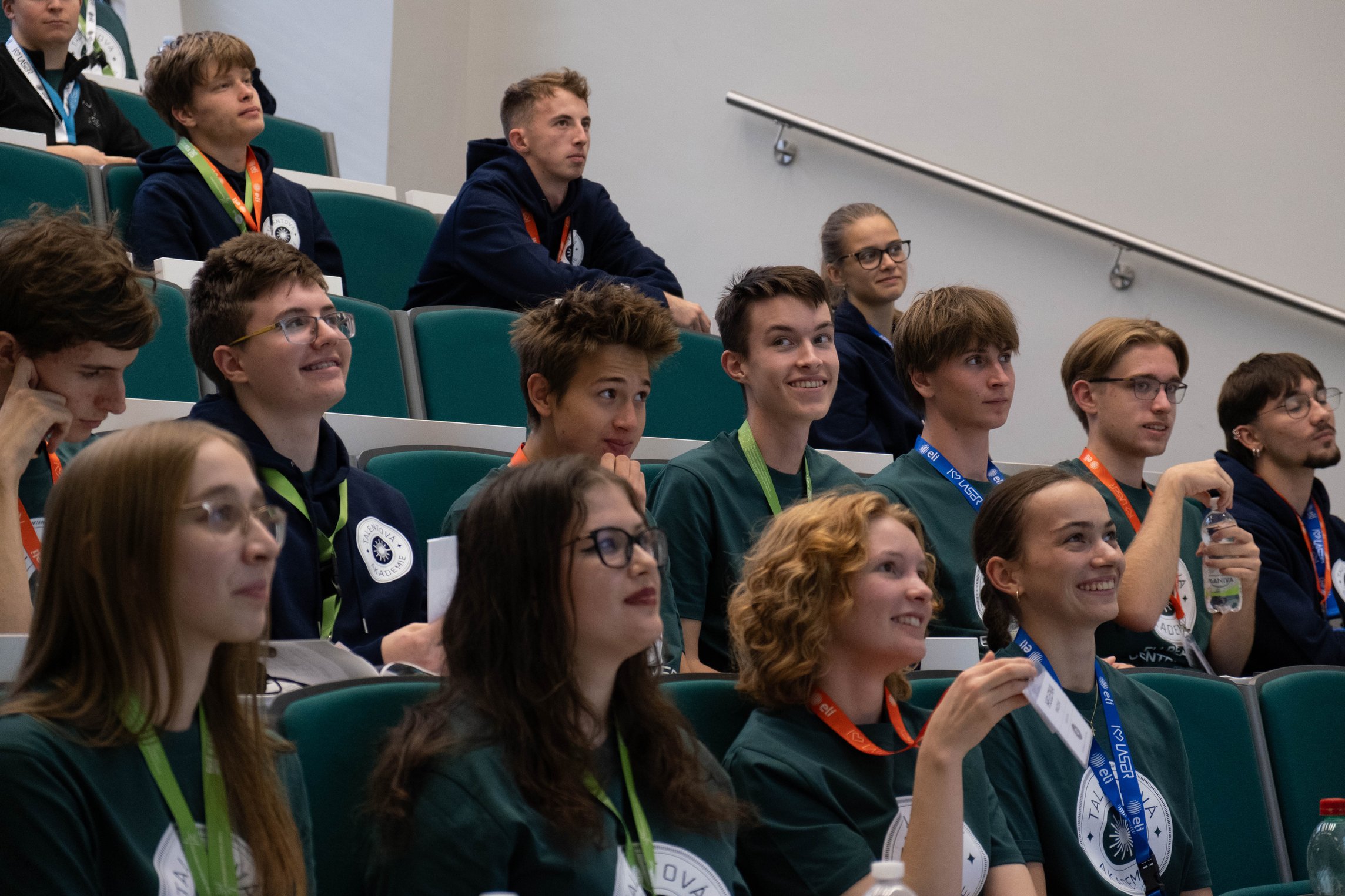
The Talent Academy finalists had to build and program a device to transmit an encryption key using light, test whether it could detect an eavesdropping attempt and use the resulting key to encrypt an image. They used lasers and detectors to simulate the quantum regime.
Why are researchers working on technologies like these? As quantum computers capable of cracking complex mathematical ciphers develop, the need to find new ways to protect sensitive information is growing. One approach is quantum communication, which is gradually moving from laboratories into practical applications. For example, the European EAGLE-1 project, being developed in cooperation with the European Space Agency (ESA), aims to test the distribution of encryption keys between a satellite and ground stations.
The ATLAS project at the HiLASE Centre also explores the use of lasers in space, for example for communication or tracking and removing space debris. Funded by the European Union, the project also supported this year’s Talent Academy, which gives secondary school students the opportunity to try tackling similar technological challenges.
‘We want to show students that science is about more than knowledge and correct answers. They are given a real technical problem that they have to solve together. This year’s quantum cryptography challenge is a wonderful example of how the laws of physics can be turned into technologies that will one day protect our communications,’ explains Michal Vyvlečka, a mentor and quantum physicist based at the University of Stuttgart.
Laser laboratories come alive with a science hackathon
Now in its ninth year, the Talent Academy gives talented secondary school students the chance to experience real scientific work. Twelve students reached this year’s final after an online round in which they had to demonstrate both their subject knowledge and their ability to think and experiment independently.
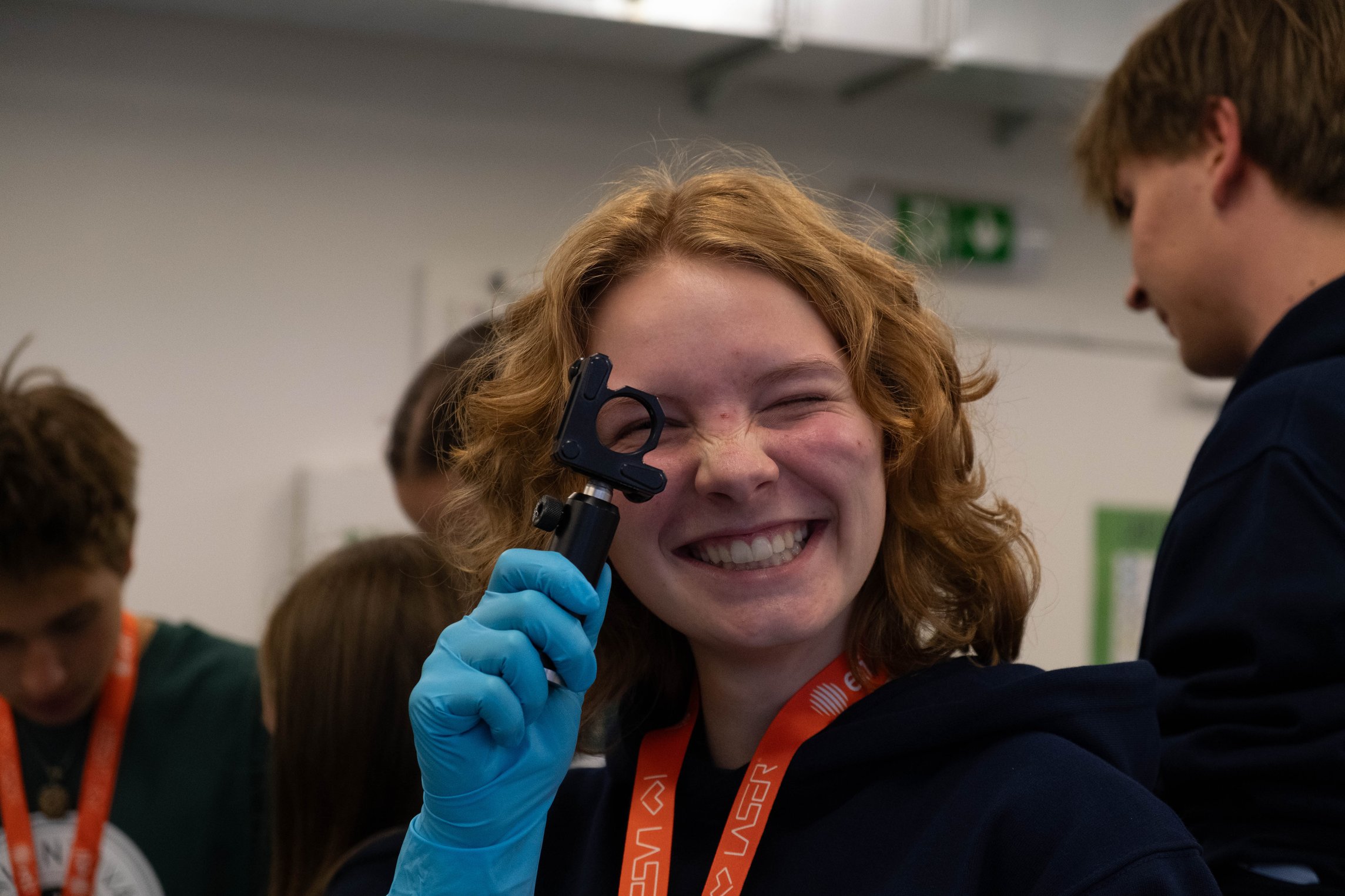
Saturday’s programme began with laboratory tours at both research centres. The students went behind the scenes to see advanced laser systems, including the record-breaking BIVOJ laser and the ultrafast PERLA system. They then split into three teams and took part in workshops on laser optics, programming, electronics and 3D modelling.
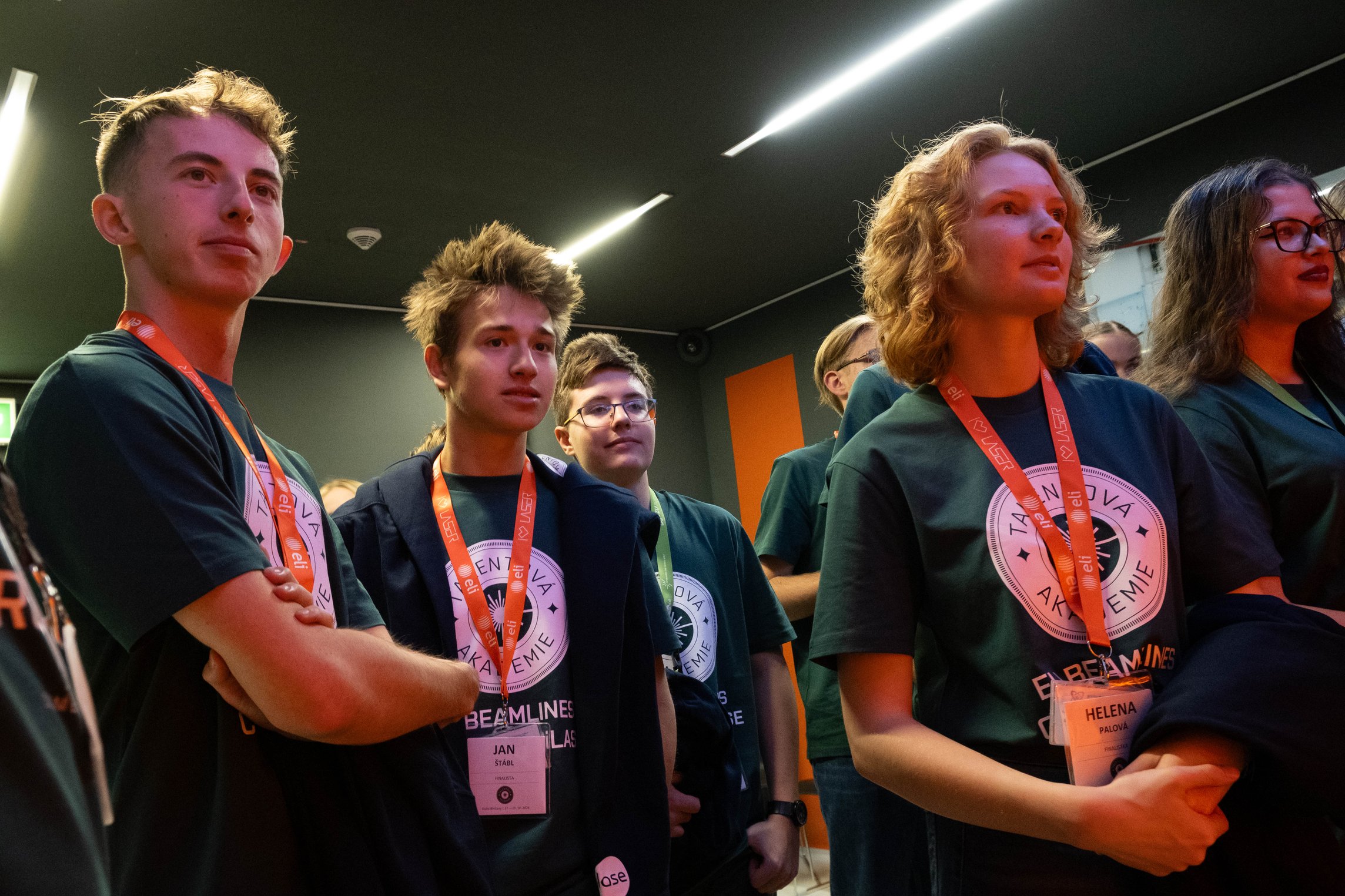
‘I thought we would mainly be listening to lectures and learning interesting things about lasers. I wasn’t expecting so much scientific work in the laboratories,’ says Helena Palová, one of this year’s finalists. ‘It was also great to visit the laser halls and see the most powerful lasers in the world. That was quite an experience.’
By Sunday morning, the teams were presenting their experimental designs to a panel of experts. After a round of thorough questions, they moved on to building, programming and testing their devices. All the while, the clock kept ticking. The Talent Academy takes the form of an intensive science hackathon, with participants working late into the night on the ELI Beamlines premises.
‘At the beginning, twelve students come together, most of whom have never met. Within a few hours, they have to learn to work together, divide up the tasks and find solutions as a team. And it isn’t always easy, especially when things aren’t working and everyone is tired,’ says Beáta Plaskurová, one of the organisers and a Talent Academy alumna, who is now at the University of Glasgow. ‘It’s interesting to watch twelve individuals become three well-coordinated teams in a single weekend.’
When the experiment ends, the scientific work continues
On Monday, the students had to present and defend their work before experts from ELI Beamlines and HiLASE. They had to demonstrate their devices, evaluate their measurement data and explain what had worked and what they would do differently next time. Because even an unsuccessful experiment can yield valuable findings.
‘Every year before the Talent Academy, I tell myself that I already have more than enough on my plate at work and that another three-day marathon is the last thing I need,’ laughs Tyler Green, a senior scientist at ELI Beamlines who helps develop unique high-power laser systems. ‘But then Monday comes. I see students who knew almost nothing about the problem three days earlier now standing in front of scientists from the laser centres, presenting their own experiments and explaining how they work. And when I see their joy at what they’ve achieved, all the tiredness disappears.’
For some participants, three days in Dolní Břežany are their first encounter with real science; for others, they are the beginning of a much longer journey. Talent Academy alumni now study at universities in Czechia and abroad, return for research internships or help organise future editions as junior assistants.
The ninth Talent Academy is jointly organised by the ELI Beamlines and HiLASE laser centres in cooperation with Education42morrow. For more information, visit www.talentovka.cz.